

Three Supermassive Black Holes Discovered at Dawn of the Universe
SciTechDaily ·
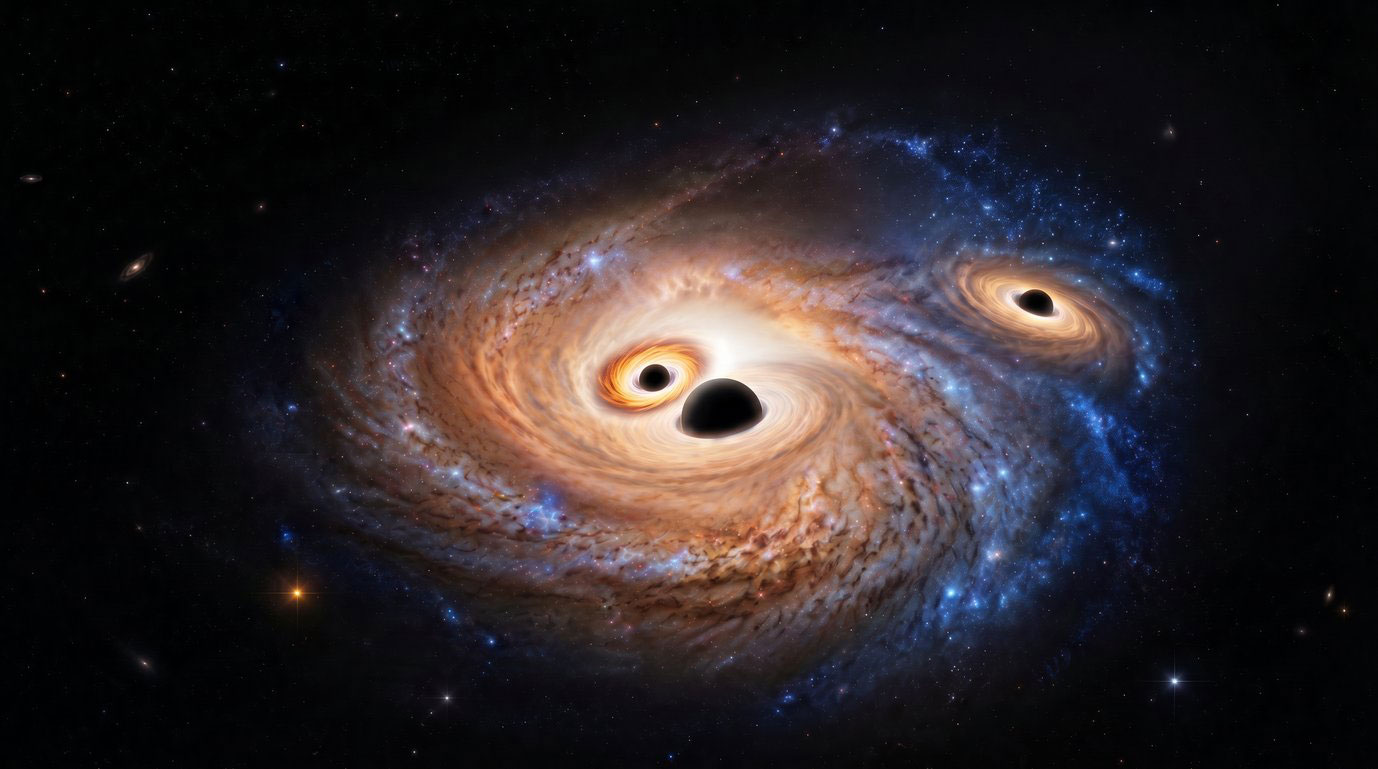
Scientists have detected three supermassive black holes in the J0148-4214 galaxy, dating back to the early universe. This galaxy began emitting light just 1.2 billion years after the Big Bang, approximately 12.5 billion years ago. An international team led by the Max Planck Institute noted that these black holes are actively pulling in matter and are located quite close to the center of the galaxy.
The masses of the black holes are equivalent to 80 million, 0.6 million, and 2 million solar masses, respectively. Two of the black holes are expected to merge within a few hundred million years, which could contribute to the rapid growth of black holes in the young universe. Researchers emphasized that these findings suggest that the merging of black holes could provide an additional pathway for rapid growth in the early universe.